Activity and play
Importance and Benefits of Outdoor Play for Children
Outdoor play is critical for healthy child development. Learn how active outdoor activities build motor skills, fitness, social skills, and self-control.
About: Importance and Benefits of Outdoor Play for Children
Both indoor and outdoor play experiences are important for child development. While recent research has shown a decline in children engaging in active outdoor play, it remains critical to your child's healthy growth. The outdoors presents unique opportunities for sensory exploration, motor skills development, and social interaction that cannot be fully replicated indoors.
Outdoor Activities by Age
- Messy play: Outdoor areas are ideal for children to engage in messy play with sand, water, paint, and other art and craft activities. The outside playground offers a much wider variety of natural materials to stimulate the senses.
- Water play: Paddling pools are great for water play. Your toddler will enjoy splashing and kicking. Include cups and containers of different shapes and sizes for stacking, scooping, and pouring.
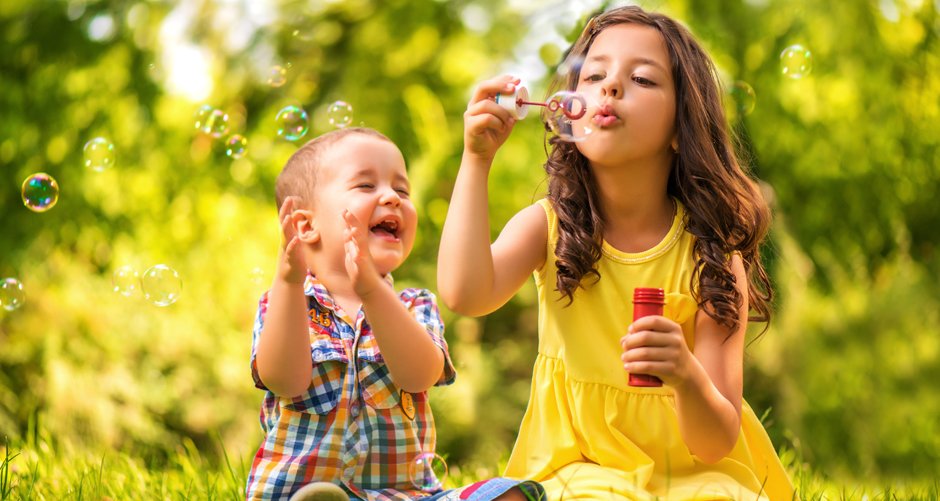
- Bubble play: Bubble machines are excellent for developing spatial awareness as your child excitedly attempts to catch bubbles floating through the air.
- Preschool active play (2-5 years): Children learn to use wheeled toys and enjoy climbing large playground equipment. They also enjoy playing with balls, bowling sets, skipping ropes, and racket games.
The outdoors presents more opportunities for children to engage in active play, which is important for the development of key motor skills such as running, balancing, chasing, throwing, and catching.
Health Benefits of Active Outdoor Play
- Enhances your child's fitness
- Reduces the chances of obesity
- Promotes general wellbeing
Developmental Benefits of Outdoor Play
- Environmental exploration: Children explore their environment in relationship to themselves, creating their own places for play.
- Imaginative play: Outdoor spaces support imaginative play with realistic props like cubby houses, tents, clothes lines, and trucks, as well as symbolic props like cartons, logs, and rocks.
- Noise and physical play: Outdoor spaces are perfect for games involving lots of noise and non-violent rough-and-tumble play. Use these opportunities to teach "inside" and "outside" voices.
- Self-control development: Outdoor active play can be intensely stimulating and creates opportunities for children to learn self-control.
- Social skills: Research shows popular children are more likely to engage in high levels of physical play with peers. Playing actively with your child promotes good health while developing essential social interaction skills.
Kimberly-Clark India makes no warranties or representations regarding the completeness or accuracy of the information. This information should be used only as a guide and should not be relied upon as a substitute for professional medical or other health professional advice.
FAQs on Importance and Benefits of Playing Outdoors
Outdoor play is critical for healthy child development. It builds key motor skills like running, balancing, throwing, and catching. It also enhances fitness, reduces obesity risk, promotes general wellbeing, and develops self-control and social interaction skills.
Paddling pools for water play with splashing and kicking, messy play with sand and paint, and bubble machines for developing spatial awareness are excellent for toddlers. Include cups and containers of different shapes and sizes for stacking, scooping, and pouring.
Preschool-age children enjoy using wheeled toys, climbing large playground equipment, and playing with balls, bowling sets, skipping ropes, and racket games. These activities support active play and the development of key motor skills.
Active outdoor play enhances your child's fitness, reduces the chances of obesity, and promotes general wellbeing. The outdoors provides more opportunities for active play involving running, balancing, chasing, throwing, and catching.
Research shows popular children are more likely to engage in high levels of physical play with peers. Playing actively with your child develops essential social interaction skills and helps them learn self-control during stimulating activities.
Realistic props like cubby houses, tents, clothes lines, and trucks support outdoor imaginative play. Symbolic props such as cardboard cartons, logs, and rocks are equally valuable as they extend children's creativity and imagination.
Outdoor active play can be intensely stimulating, creating opportunities for children to learn and develop self-control. Children learn to manage the intensity of physical play, which is important for success in social interactions with peers.