Activity and play
Play as Your Baby Grows: Age-by-Age Activity Guide
Discover how your baby's play changes from birth through 24 months. Learn age-appropriate toys and activities to support development at every milestone.
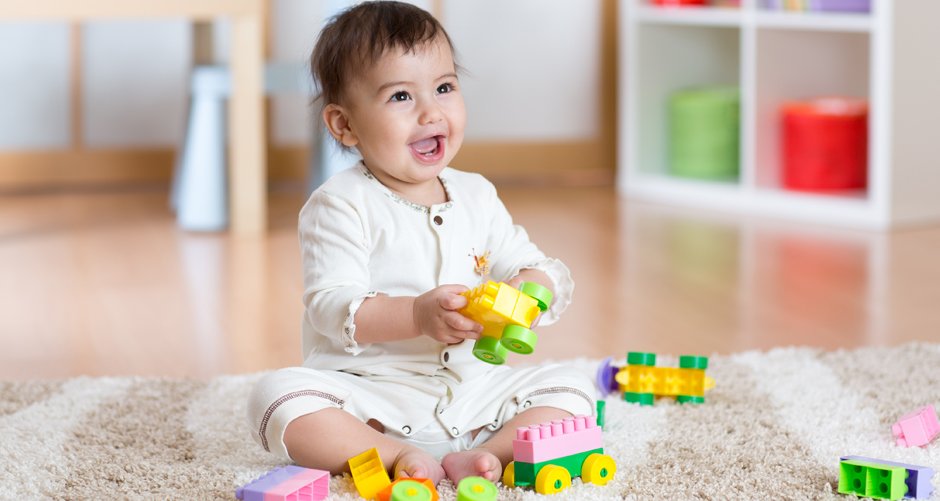
Your baby learns about the environment and how to interact with it through one crucial activity - playing. As a parent, always encourage your baby to pick up new things, crawl around, and explore their surroundings. Understanding how children at different ages play helps you choose the right activities and equipment for their development. Here is an age-by-age guide to baby play.
Up to 6 Months: Sensory Exploration
- In the first months, your baby's senses are not fully developed. They can only see things 8-14 inches from their eyes.
- They enjoy soft sounds and music, your cooing, and even singing.
- At about 3-6 months, your child can suck their fingers and grasp a toy placed in their hand. Grasping is a very important step in baby development.
- They begin reaching for toys independently and can pass objects between their own hands.
- Provide toys that are big, colourful, and full of sounds and music, preferably moving like a toy wind-up car.
- Ensure toys are safe for chewing, as this is the stage where babies love to put things in their mouth.
6 to 12 Months: Movement and Discovery
- At about 9 months, your baby becomes aware that objects still exist even when out of sight. Hide their favourite toy under a blanket for a fun discovery game.
- Your child is becoming increasingly mobile - crawling, pulling to stand, and cruising.
- They pick up whatever they find on the floor and put it into their mouth, so ensure the area is clean and safe.
- A ball is a great toy at this stage - babies love catching and bouncing it.
- From 9 months, shape sorters test problem-solving abilities, and toy telephones encourage imitation of phone calls.
- When your baby begins to walk, they will enjoy pushing and throwing toys around.
12-24 Months: Independence and Exploration
- Your little one will explore all corners of the house with more coordinated hands for scribbling and sorting toys.
- They become experimental - wondering "What happens if I drop this bowl?" - and test their limits repeatedly to gain mastery.
- Active and imitative, your child will want push and pull toys and large building blocks for stacking.
- Provide non-toxic crayons and paper for scribbling, and a safe area for climbing, hiding, sliding, and practising gross motor skills.
- Puzzles develop problem-solving skills, and tiny instruments introduce rhythm and tune.
| Age Range | Key Development | Recommended Toys |
| 0-6 months | Sensory exploration, grasping (3-6 months), visual range 8-14 inches | Colourful musical toys, chew-safe items, wind-up toys |
| 6-12 months | Object permanence (9 months), crawling, cruising | Balls, shape sorters, toy telephones, push toys |
| 12-24 months | Hand coordination, independence, problem-solving | Building blocks, crayons, puzzles, instruments, climbing equipment |
Your Role as Parents
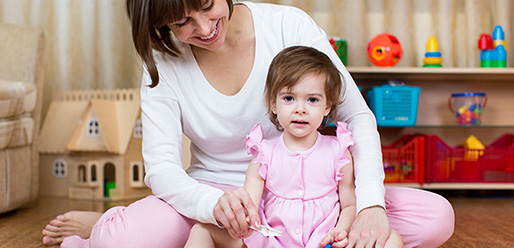
You are your child's best playmate. Studies show that creative children are usually the result of parents who have involved themselves with their child's play. Never hesitate to join in at your child's level - daily playtime is a wonderful way to bond and create rich, fun experiences together.
Kimberly-Clark India makes no warranties or representations regarding the completeness or accuracy of the information. This information should be used only as a guide and should not be relied upon as a substitute for professional medical or other health professional advice.
FAQs on Play As Your Baby Grows
Baby play evolves significantly with age. From 0-6 months, play is sensory - soft sounds and grasping toys. At 6-12 months, babies become mobile and enjoy balls, shape sorters, and discovery games. By 12-24 months, they explore independently with building blocks, puzzles, and crayons.
Big, colourful toys full of sounds and music are best for babies under 6 months. Choose moving toys like wind-up cars. Ensure all toys are safe for chewing, as babies at this stage love putting things in their mouth. Their visual range is only 8-14 inches.
Object permanence is when your baby understands that objects still exist even when out of sight. It develops around 9 months old. You can test this by hiding their favourite toy under a blanket and watching them lift it to find the toy underneath.
Toddlers aged 12-24 months enjoy push and pull toys, large building blocks for stacking, non-toxic crayons for scribbling, puzzles for problem-solving, tiny musical instruments, and safe climbing areas. They become experimental and imitative of parents.
Babies start grasping toys placed in their hands at about 3-6 months old. Grasping is a very important step in overall baby development. They will then begin reaching for toys independently and can pass objects between their own hands.
Parents are their child's best playmate. Studies show that creative children are usually the result of parents who have involved themselves in play. Join in at your child's level - daily playtime is a wonderful way to bond and support development.
Babies enjoy shape sorters from about 9 months old, when they develop enough problem-solving ability to work with them. Shape sorters test their cognitive skills and hand coordination. Toy telephones are another favourite at this age for imitating phone calls.