Diapering 101: A Complete Guide to Changing Baby Diapers
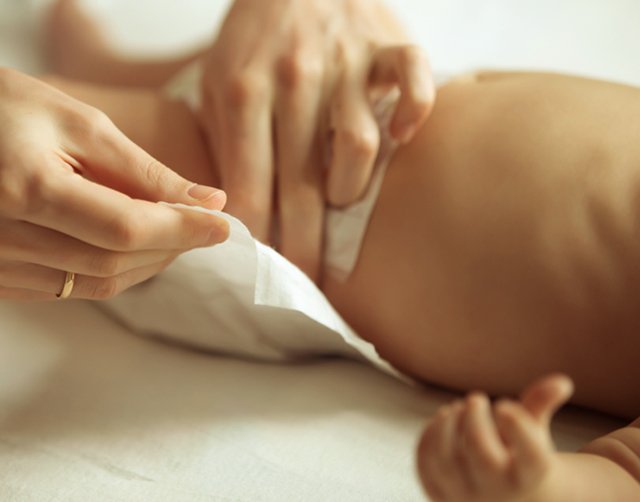
Mastering the art of diaper changing ensures both you and your baby enjoy this daily routine. Over the years, experts have gathered the best suggestions for stress-free diapering. From essential supplies to step-by-step instructions, here is everything you need to know.
Essential Diapering Supplies to Keep at Hand
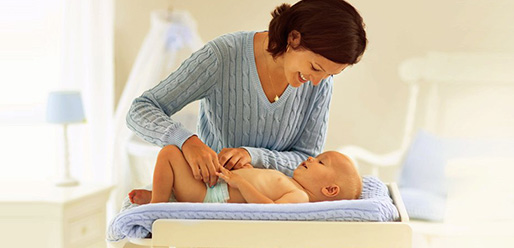
A well-planned changing area makes diapering quicker and easier. Keep essential supplies close at hand yet out of baby's reach on nearby shelves:
- Diapers
- Baby wipes
- Baby lotion, cream, or oil
- Cotton and petroleum jelly
- Diaper rash cream and diaper rash liquid powder
If a baby is preoccupied, they will not wiggle and squirm. Give baby something to look at while being changed, such as an unbreakable mirror or a colourful picture. When baby can grasp objects, keep favourite toys close at hand.
How to Change a Diaper in 3 Simple Steps
Step 1: Remove the Soiled Diaper
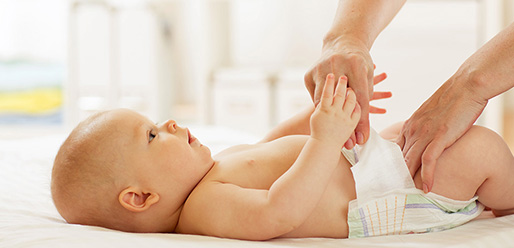
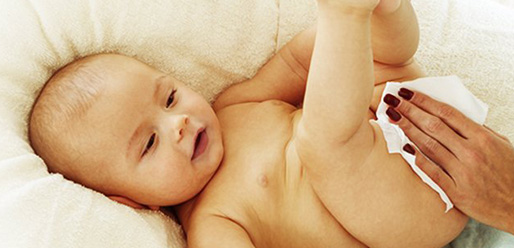
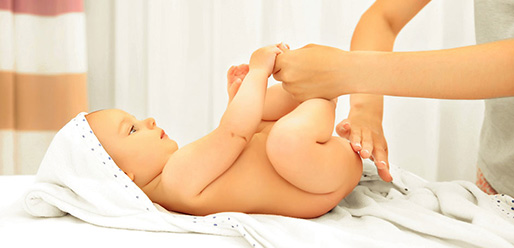
Gently lay your baby down on a flat, firm surface. Unfasten the soiled diaper and hold both your baby's legs up by grasping both ankles with one hand. Remove the soiled diaper and thoroughly cleanse baby's bottom in and around all creases with HUGGIES Baby Wipes , and wipe baby's bottom from front to back.
Step 2: Apply Cream or Powder
Apply any jelly, cream, or powder you are going to use. If using baby powder or cornstarch, shake it carefully into your hand first and then pat it on your baby so they do not breathe in a cloud of powder. Alternatively, use liquid powders that do not have airborne particles.
Step 3: Secure the Clean Diaper
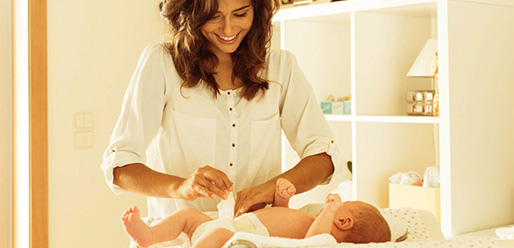
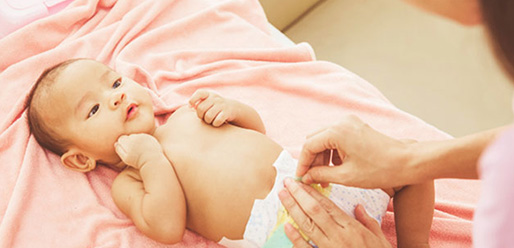
Slide a clean diaper under your baby with the fasteners in the back. Pull the diaper up between baby's legs, ensuring it is straight so it wraps evenly around baby's hips. Open the tabs, place them over the front, and press firmly. Fasten the side closest to you first, then roll baby toward you to tighten and fasten the other side.
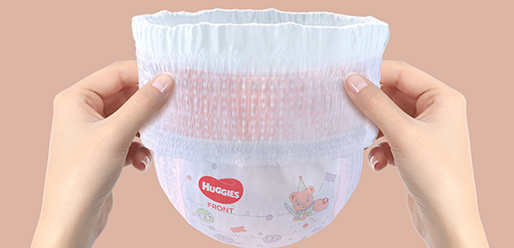
The fasteners on HUGGIES diapers can be opened and refastened as often as necessary. Special safety note: even a tiny newborn can roll off a changing table, so always keep one hand on your baby or use a strap.
Understanding Your Baby's Bowel Movements
- Most new babies have between 1 and 10 bowel movements daily, and their stools are usually quite loose.
- Breast-fed babies may have a bowel movement at every nursing, with stools that are much looser than bottle-fed babies.
- Breast-fed babies usually have yellowish-greenish stools; bottle-fed babies tend to have darker stools.
- Some babies may go up to three days without a bowel movement, which is not abnormal.
- If your baby has trouble pushing stool out or goes longer than three days, call your doctor right away.
- If you notice an increase in frequency or a change in colour or odour, your baby may have diarrhoea - consult your doctor immediately.
Diaper Rash: Causes, Prevention and Care
Diaper rash is caused by bacteria that react with urine to form ammonia, which irritates the skin causing small red pimples or patches of rough red skin. Keeping baby dry is the best prevention. Doctors recommend checking diapers often and changing them at the slightest trace of wetness. Highly breathable diapers like HUGGIES can help keep baby's skin dry.
- Check and prevent diaper rash by changing diapers frequently.
- Apply a thin layer of protective ointment or petroleum jelly to the affected area.
- Leave diapers off for at least 15 minutes daily to help clear up a rash.
- If a rash does not heal in a couple of days, consult your doctor.
What to Pack in Your Diaper Bag
The diaper bag is the essential piece of luggage when travelling with your baby. Be prepared with these essentials:
| Item | Purpose |
| HUGGIES Baby Wipes Travel Pack | Cleaning during changes and general wiping |
| HUGGIES Diapers | Supply of fresh diapers |
| Plastic bags with twist ties | Easy disposal of soiled diapers |
| Cream, jelly, or protective ointment | Rash prevention and skin care |
| Bottles for meals | Feeding on the go (in a separate pocket) |
| Small toy or rattle | Distract baby during diaper changes |
| HUGGIES Disposable Changing Pads | Protect baby from unsanitary surfaces in public |