3 Types of Intelligence in Babies: Emotional, Verbal, Logical
Your little one's brain learns better when challenged with new information. Babies are very sensitive to their environments and can pick up on a lot while still infants. They have certain windows of opportunity when it comes to learning specific skills. There are different ages at which babies develop emotional intelligence, speech, and math and logic skills. Here is how you can help start this exciting process of learning.
Emotional Intelligence: 0 to 18 Months
Emotions like empathy, happiness, hopefulness, and sadness are shaped by how your baby is nurtured from birth. Emotional intelligence defines how one understands and interacts with others. While it continues to develop through adolescence, early experiences form the lifetime foundation.
- Acknowledge and verbalize the emotions your baby is feeling (e.g., "Why are we crying? Has something upset us?").
- Show empathy when your baby is upset.
- Bond with your baby on their level - "converse" through baby sounds.
- Explain why you are saying "no" instead of just saying it.
- Allow your baby to help in family activities such as sorting laundry.
- Express positive feedback for good behaviour.
- Explain when and how your baby's actions affect others.
- Provide a safe and consistent environment for your little one.
Speech and Language Development: 0 to 10 Years
The more you speak, the more communication your baby is exposed to. Babies are born with the ability to learn any language and can pick up grammar and sentence construction in ways adults cannot. Take advantage of these tips to develop language skills:
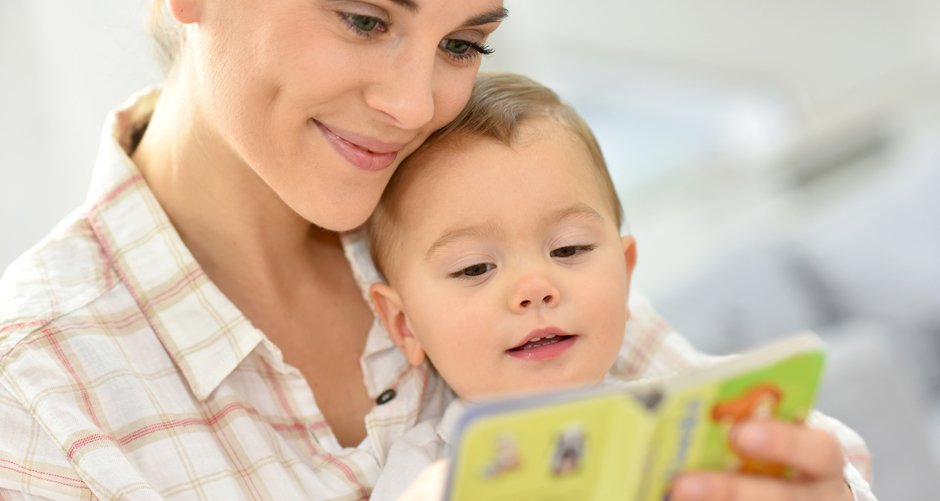
- Start reading to your baby at a very young age (begin while you are 7 months pregnant).
- Talk back to baby's cooing and babbling.
- Point out and name things around you.
- Repeat yourself often and pronounce words clearly.
- Use daily activities to explain what you are doing.
- Sing songs and teach your baby the words.
- Play language games like nursery rhymes.
- Consider teaching a second language while your child is still young.
Math and Logic Skills: 1 to 5 Years Old
Problem-solving skills are directly related to sight, sound, and touch. Your baby's math skills can be formed in conjunction with their musical skills. Here are ways to stimulate those senses for spatial relations and problem solving:
- Give your baby different shapes, objects, and colours to touch and see.
- Expose your child to classical music.
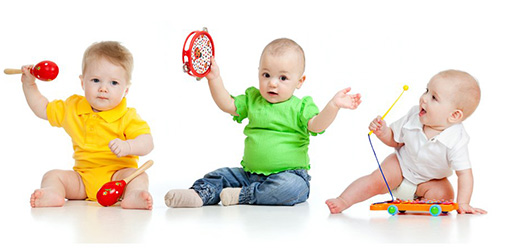
- Give your baby toy musical instruments to play with.
- Attach a mirror in your baby's crib.
- Carry your baby facing outwards so they have lots to look at.
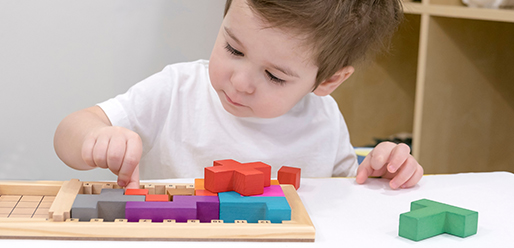
- Provide toys that can be taken apart or put together.
- Use toys that make noise when squeezed or pulled to teach cause and effect.
- Teach your baby to put things in categories.
- Play counting games.
| Intelligence Type | Window of Opportunity | Key Activities |
| Emotional Intelligence | 0-18 months | Acknowledge emotions, show empathy, positive feedback, safe environment |
| Speech and Language | 0-10 years | Read aloud, talk back to babbling, name objects, sing songs, nursery rhymes |
| Math and Logic | 1-5 years | Shapes and colours, classical music, puzzles, counting games, cause and effect toys |