Your Baby's Brain Development: Sensory and Verbal Growth
Raising a child in today's fast-paced world brings immense pressure on both children and parents. Toys promise to make your child smarter and flashcards for babies are commonplace - but do these gimmicks really work? Understanding how your baby's brain development actually works helps you focus on what truly matters: purposeful stimulation through sensory pathways, movement, and language.
Development of a Baby's Sensory Pathways
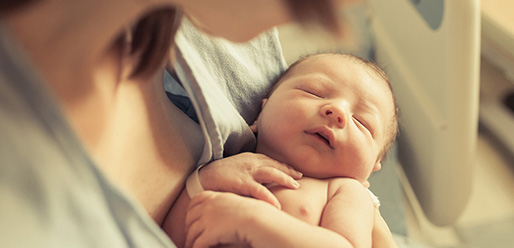
At birth, your little one can barely see, hear, or feel. These sensory pathways grow and develop based on stimulation provided with proper frequency, intensity, and duration.
- Visual stimulation example: A newborn baby usually has a less-than-perfect light reflex. On being exposed to light, the pupil constricts. The sooner this reflex matures and becomes consistent, the quicker the baby develops the ability to see outlines and then detail. This is purposeful stimulation rather than accidental stimulation.
- All five pathways matter: A full sensory stimulation programme at the newborn level covers seeing, hearing, feeling, tasting, and smelling. These brief stimulations help each pathway mature.
- Maturation leads to usefulness: As these pathways grow and become more mature, they become more useful for the baby in exploring their environment.
- Parent evaluation: Parents can learn how to evaluate these pathways, making it easy to determine what their baby needs next and what they no longer need.
How Your Baby's Brain Grows Through Stimulation
The brain grows explosively between conception and age six. Providing your little one with visual, auditory, and tactile stimulation along with enhanced mobility (movement of motor skills) and language (speech) helps them develop more rapidly in all areas.
- Stimulation increases your baby's overall understanding of the world and greatly improves their interaction with the family.
- Your baby's health, happiness, and general well-being are significantly improved by stimulation and opportunity.
- Growing one area of the brain enhances all other areas to a certain degree.
- When a baby moves more on the floor, their respiration improves. As they breathe better, they make more sounds. More sounds lead to more parent-child conversation, building cognitive development naturally.
The Growth of Your Baby's Verbal Abilities
Babies begin clearly articulating their first words between 8 and 20 months because they have been absorbing and retaining sounds of a language and associating meanings to those sounds throughout their early life.
- Their brains are programmed to imprint and later recall every sound and word pattern.
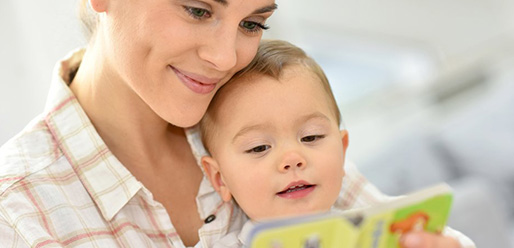
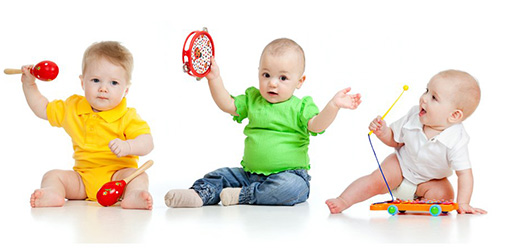
- Verbal abilities can be developed through language immersion action games, structured games, visual aid games, props, and vocabulary-rich songs. This provides a lifelong gift - a love of learning and communication.
- Although babbling sounds insensible to adults, it is a sign that your little one is beginning to talk. Your baby is trying to convey meaning and repeat what adults say.
Do's for Supporting Baby Brain Development
- Listen to the baby, always.
- Look at your baby like you are listening.
- Be willing to wait for their response.
- Accept that they decide whether to respond or not - it is your child's choice.
- Enthusiastically welcome every effort they make to talk.
- Assign meanings to the specific sounds they make repeatedly.
- Use real words while talking to your baby.
Don'ts When Communicating With Your Baby
- Do not use "baby talk" with the baby.
- Do not ignore them.
- Do not ask a question and leave no time for them to answer.
- Do not neglect to answer them.
- Do not imitate or make fun of the sounds they make.
- Do not correct their pronunciation.
- Do not try to force your baby to answer or respond.
| Development Area | Age/Stage | Key Activities |
| Sensory Pathways | Newborn onwards | Visual, auditory, tactile stimulation with proper frequency and intensity |
| Brain Growth | Conception to age 6 | Floor movement, language exposure, multi-sensory stimulation |
| Verbal Abilities | 8-20 months (first words) | Language immersion games, vocabulary-rich songs, responsive conversation |