learning development
Practical Tips to Help Your Child Start Talking Sooner
Most children start talking by 18 months. Learn 14 practical tips to encourage your child's speech development through play, listening, and daily interaction.

About: Practical Tips to Help Your Child Start Talking Sooner
Children learn to talk at different ages. Some utter their first intelligible words before they are one year old while others may not speak until they are over two. Generally, most children start to talk by eighteen months. The process of talking involves attending, listening, thinking, understanding, wanting and needing to speak. It also involves taking turns and coordinating all the right muscles for speech development. Children must be encouraged to talk in the same way they are encouraged to walk - and remember, they can understand what is being said long before they can use words themselves.
Tips to Encourage Your Child's Speech Development
- Talk during play: Talk to your child when you are playing together to build language naturally.
- Use nursery rhymes and songs: Have fun with nursery rhymes and songs, especially those with actions that engage your child.
- Encourage listening: Help your child listen to different sounds such as animals, aeroplanes, and the ring of the doorbell.
- Gain attention first: Get your child's attention when you talk. Encourage them to look at you or at the object you are talking about.
- Encourage all forms of communication: Let your child communicate through gestures, facial expressions, and not just words.
- Use visual aids: Use gestures and pictures to support spoken language.
- Offer choices: Give your child choices such as "Do you want an orange or a banana?" to encourage verbal responses.
- Narrate daily activities: Talk about things as they happen - when changing, watching television, or unpacking shopping.
- Listen and take turns: Listen carefully and give your child time to finish what they are saying. Practice turn-taking in conversation.
- Expand their vocabulary: Add onto what your child says. When they say "ball", respond with "Yes, it is a ball and we can play with it."
- Model correct speech: If your child says something incorrectly, say it back the correct way. However, do not force them to repeat words.
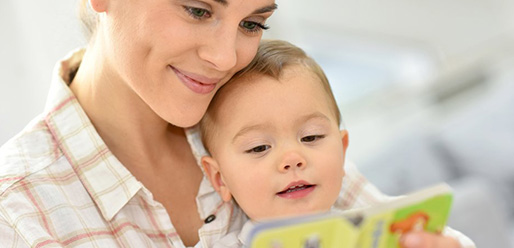
- Dedicate daily reading time: Set aside special time each day to play with toys and read picture books together.
- Be patient: Do not expect too much too soon. Time will bring out the best in your child.
- Avoid comparison: Do not worry if your child is not at the same stage as other children. Talking takes time - do not hurry them.
Kimberly-Clark India makes no warranties or representations regarding the completeness or accuracy of the information. This information should be used only as a guide and should not be relied upon as a substitute for professional medical or other health professional advice.
FAQs on Tips To Help Your Child To Talk
Most children start talking by eighteen months old. Some utter their first intelligible words before one year while others may not speak until over two. Children develop speech at different rates, so there is no need to worry if your child is slightly behind peers.
Talk to your child during play, use nursery rhymes and songs with actions, narrate daily activities, offer choices to encourage verbal responses, expand on their words, and dedicate daily time for reading picture books together. Listen carefully and give your child time to finish speaking.
Say the word back the correct way without forcing your child to repeat it. Modelling correct speech naturally allows them to hear the right pronunciation without feeling pressured. Add onto what they say to help them learn new words and sentence structures.
Children learn to talk at different ages and rates. Talking involves attending, listening, thinking, understanding, and coordinating muscles for speech. Do not expect too much too soon. Do not compare your child with others as time will bring out the best in your child.
Nursery rhymes and songs, especially those with actions, help children develop speech through rhythm, repetition, and melody. They make language learning fun and help your child associate words with movements, building vocabulary and listening skills simultaneously.
Talk about things as they happen during daily routines like changing, shopping, or watching television. Give your child choices between options, read picture books together daily, play with toys while narrating actions, and use gestures and pictures alongside spoken words.