Commercial vs Homemade Baby Food: What Parents Should Know

In today's health-conscious world, it is easy to find commercial baby food products that are nutritious for your little one. However, it is important to be selective when choosing commercially prepared baby foods. Ensure they are age-appropriate, contain quality ingredients, have minimal or no additives or preservatives, and contain no salt or sugar except in the form of fruit juice. Always try to choose baby food that is nutritious for your child.
Why Homemade Baby Food Is Better Than Commercial Options
While commercial baby food is helpful for travel or busy days, making it the primary part of your baby's diet can cause several problems. Here is a comparison of the key differences:
| Factor | Commercial Baby Food | Homemade Baby Food |
| Taste and Texture Variety | Limited range of tastes and textures | Wider variety of tastes, foods, nutrients, and textures |
| Sweeteners | May contain hidden sweeteners like fruit juice or skim milk, even in "no added sugar" products | No sneaky sweeteners or preservatives; full control over ingredients |
| Texture Progression | Generally softer and smoother for safety reasons; may slow progression to lumpier foods | Can gradually increase lumpiness from 7 months to finger foods at 9 months |
| Portion Control | Jar sizes may suggest ideal serving but every child's capacity differs | Full control over quantity appropriate for your baby |
| Marketing Influence | Labels like "dinner" or "dessert" reflect adult eating patterns | Freedom to mix up food and let eating habits form naturally |
- Reduced variety: Infants who eat homemade food tend to get a wider variety of tastes, foods, nutrients, and textures compared to those relying primarily on commercial options.
- Hidden sweeteners: Fruit juice or skim milk is often used to sweeten commercial products, even those labelled "no added sugar." This can cause babies to develop strong preferences for commercially prepared foods.
- Texture concerns: Over-reliance on soft commercial food for too long can slow the progression to meals. Increasingly lumpier-textured food should be given around seven months, leading to finger foods at around nine months. Lumpy food supports normal baby development including speech, growth, and dentition, and helps avoid food fussiness later.
- Quantity confusion: A jar may suggest it is the ideal serving for all babies, but every child's capacity is different. With homemade food, you control the portion size.
- Adult-influenced choices: Marketing terms like "dinner" or "dessert" reflect adult eating patterns. The ideal approach is to mix up food as much as possible and let habits form naturally over time.
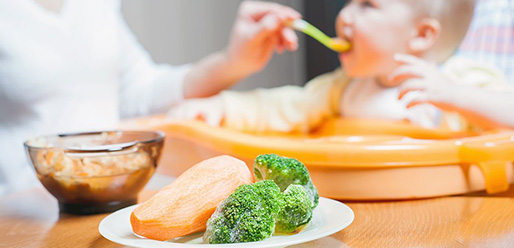
Your little one should get most of their nutrients from traditional, homemade meals where you have total quality control and can be 100% sure of what your child is consuming. Commercial foods are safe to keep on hand for emergencies or travelling, but should not replace home-cooked nutrition.