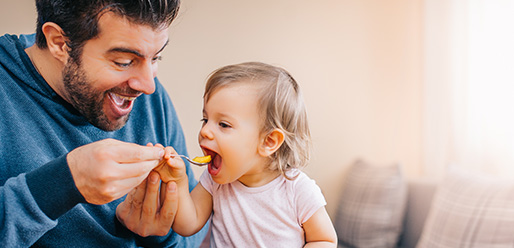
bonding with the baby
Baby Hearing Development: Age-by-Age Checklist and Tips
Monitor your baby's hearing development with this age-by-age checklist. Learn speech and hearing milestones from 3 months to 5 years and warning signs.

Monitoring your child's hearing ability and behavioural responses is essential for early detection of any issues. This checklist indicates age-appropriate behaviours for detecting hearing loss and includes tips to help your child learn to speak and use their hearing. If your child fails to respond as suggested, talk to your physician who will refer you to an ENT specialist and an audiologist for further investigation.
Speech and Hearing Development Checklist by Age
| Age | Expected Hearing and Speech Behaviours |
| 3-6 months | Awakens or quietens to the sound of your voice; turns eyes and head toward the sound source |
| 7-10 months | Turns head and shoulders toward familiar sounds even when they cannot see the source; responds to soft sounds |
| 11-15 months | Shows understanding of some words by pointing to or looking at familiar objects; may jabber in response to a voice, cry at loud thunder, frown when scolded |
| 18 months | Begins identifying body parts (points to eyes or nose on request); uses a few words like "bye-bye" - may not be perfectly pronounced but clearly meaningful |
| 2 years | Follows simple commands without visual cues; uses everyday words heard at home; enjoys being read to and points out pictures in books |
| 2.5 years | Recites or sings short rhymes and songs; enjoys listening to music or watching cartoons; reacts to sounds by running to look or telling someone |
| 3 years | Understands and uses simple verbs ("go"), prepositions ("in," "on"), adjectives ("big," "small"), and pronouns ("I," "you"); locates sound sources; uses complete sentences sometimes |
| 4 years | Gives connected accounts of recent experiences; carries out a sequence of two simple directions (e.g., "take the ball and give it to mummy") |
| 5 years | Speech is understandable though some mispronunciation may occur; can carry on a conversation within their vocabulary |
Tips to Encourage Your Child's Speech and Hearing
| Age | Activities to Encourage Speech and Hearing |
| 4 months | Imitate your child's sounds; talk using a pleasant tone; call out to your child while working around the house |
| 7 months | Continue imitating babbling sounds; hold your child close and sing or talk repeatedly; play peek-a-boo and discuss favourite toys |
| 9 months | Make simple speech sounds for your child to imitate (e.g., "gah-gah"); respond when your child calls out; engage in interactive games |
| 12 months | Show body parts (say "here's your nose" and place their hand on it); show simple picture books; play "Where's papa?"; explain sounds (e.g., "What does a doggy say?" - "bow-wow") |
| 24 months | Read simple books to your child and ask questions like "Where's the cow?"; ask them to put or take things away; talk about everything they play or see |
Warning Signs of Hearing Loss in Children Above 5 Years
If your child exhibits any of these signs, consult your physician for further audiological investigation:
- Has speech delay or deteriorating speech
- Continually asks to repeat what was said
- Gives inappropriate responses to questions
- Does not hear background noise
- Likes the television volume tuned up
- Absolutely hates sudden loud noises
- Watches your face for visual cues
- Forgets instructions and seems to daydream
- Either shouts or whispers (unable to monitor own voice levels)
- Has poor concentration
- Appears slower than other children
- Has balance problems (appears clumsy)
- Complains of noises in the ears
Kimberly-Clark India makes no warranties or representations regarding the completeness or accuracy of the information. This information should be used only as a guide and should not be relied upon as a substitute for professional medical or other health professional advice.
FAQs on Everything You Need To Know About Your Babys Hearing
Your baby should awaken or quieten to the sound of your voice between 3 to 6 months old. They will typically turn their eyes and head toward the sound source. By 7-10 months, they should turn head and shoulders toward familiar sounds even without seeing the source.
Signs include not startling or responding to sounds, not turning toward sounds by 3-6 months, not babbling by 7-10 months, and not responding to familiar words by 11-15 months. If your child fails to meet these age-appropriate milestones, consult your physician for referral to an ENT specialist.
At 4 months, imitate your child's sounds and talk in a pleasant tone. By 7 months, continue imitating babbling and sing to them. At 9 months, make simple speech sounds for them to copy. By 12 months, show body parts and picture books. At 24 months, read simple books and ask questions.
By 18 months, children should be using a few words such as "bye-bye." The words may not be perfectly pronounced but are clearly meaningful. By 2 years, they should be using a variety of everyday words heard at home and can follow simple commands without visual cues.
By age 3, your child should understand and use simple verbs like "go," prepositions like "in" and "on," adjectives like "big" and "small," and pronouns like "I" and "you." They should locate the source of sounds and use complete sentences at least sometimes.
Warning signs include speech delay, continually asking to repeat things, giving inappropriate responses, not hearing background noise, wanting TV volume turned up, hating sudden loud noises, watching faces for visual cues, forgetting instructions, shouting or whispering, poor concentration, and balance problems.
See a doctor if your child fails to respond to age-appropriate hearing and speech milestones at any stage. Your physician will refer you to an ENT specialist and an audiologist for further investigation. Early identification of hearing problems is critical for speech and language development.
At 12 months, show your child body parts by saying "here's your nose" and placing their hand on it. Show simple picture books and describe pictures. Play identification games like "Where's papa?" and explain animal sounds such as "What does a doggy say? - bow-wow."